


You found the one. The perfume that makes you feel like the main character every single time you put it on. You've been wearing it on repeat for weeks — maybe months — and then one day... nothing. You spray it on, walk out the door, and it's like your nose has completely checked out.
Don't panic. You haven't lost your sense of smell. Your perfume hasn't stopped working. What you're experiencing has a name: olfactory fatigue. And once you understand what's happening, you'll know exactly how to work with it (instead of dousing yourself in half a bottle trying to fix it).
What Is Olfactory Fatigue?
Olfactory fatigue — also called nose blindness or olfactory adaptation — is your brain's way of filtering out constant, repetitive smells. It's a feature, not a bug.
Here's the short version: your nose contains millions of smell receptors. When a scent hits those receptors over and over again, your brain starts to treat it as "background noise." It's the same reason you stop noticing the smell of your own home within minutes of walking through the door, or why you can't smell your own hair products even though everyone else can.
When it comes to your signature fragrance, the more consistently you wear it, the faster your nose learns to tune it out. You become, quite literally, immune to your own scent.
Why Does This Happen? (The Science, Made Simple)
Your olfactory system is remarkably efficient — and remarkably lazy. When sensory neurons detect a smell repeatedly, they stop firing at full strength. The signal to your brain gets quieter and quieter until it essentially disappears.
Think of it like background music in a café. When you first sit down, you notice every song. An hour later, you couldn't tell someone what was playing even if they asked. Your brain decided the music wasn't new or threatening information, so it stopped prioritizing it.
With fragrance, this adaptation can happen in as little as 15–20 minutes of continuous exposure. That's why you feel like your perfume has "disappeared" mid-morning, even though everyone around you can still smell it perfectly well.
The notes that tend to trigger olfactory fatigue fastest? Heavy, persistent ones — musks, ambers, and warm base notes. The very notes that make a fragrance feel rich and long-lasting are often the culprits behind nose blindness. Ironic, right?
Signs You're Experiencing Olfactory Fatigue (Not a Fading Fragrance)
Here's how to tell the difference:
- You can't smell it, but others can. Ask a friend — if they can still detect your fragrance, the scent is there. Your nose just adapted.
- It happens faster with fragrances you wear often. Rotating your perfumes can actually slow down olfactory adaptation.
- You keep applying more and more. The classic nose blindness spiral — you can't smell it, so you spray again, which only makes it stronger to everyone else.
- A break resets things. Step outside for a few minutes, smell something different (coffee grounds are a classic palate cleanser), and suddenly you can smell your perfume again.
How to Actually Fix It (Without Over-Spraying)
Good news: olfactory fatigue is completely manageable. Here's what works:
Rotate your fragrances. This is the single best thing you can do. Wearing a different scent every few days (or even just alternating between two) gives your nose time to "forget" each one and respond to it freshly when you return to it. It also means you get to build a perfume wardrobe — a very easy problem to have.
Give yourself a smell break. If you've lost the scent mid-day, step somewhere with fresh air for a few minutes. Your nose will reset faster than you'd think.
Try the coffee ground trick. Sniffing coffee grounds between fragrances — or when your nose feels overwhelmed — is a classic way to neutralize your olfactory receptors and start fresh.
Apply to pulse points, not fabric. Fabric holds scent for longer, which actually makes nose blindness worse since you're in constant close contact with it. Pulse points (wrists, neck, the inside of your elbows) diffuse scent more naturally and let it evolve throughout the day.
Trust the process — and other people. Just because you can't smell your perfume doesn't mean it's not there. When in doubt, ask someone you trust. The answer will probably surprise you.
The Nose Blindness Spiral (And How to Avoid It)
Here's a scenario that might sound familiar: you get dressed, spray your perfume, head out. An hour later, you can't smell anything. So you spray again in the bathroom. Then again before dinner. By the end of the night, you've applied four or five times, and you're still not getting that satisfying hit of fragrance.
Meanwhile, everyone in the elevator is very much experiencing your fragrance.
This is the nose blindness spiral, and it's incredibly common. The fix isn't more perfume — it's understanding that your scent is doing its job even when you can't detect it. Less really is more, especially with richer, longer-lasting formulas.
A good rule of thumb: two to three sprays is almost always enough. If you're consistently reaching for more, consider rotating to a second fragrance, or trying a lighter, brighter formula on days when you want something you can actually smell on yourself throughout the day (citrus and green notes tend to stay noticeable longer precisely because they're lighter and don't trigger adaptation as quickly).
Finding Fragrances That Stay Fresh to Your Nose
Some fragrance profiles are naturally more resistant to olfactory fatigue than others. Lighter, fresher compositions — think citrus, aquatics, greens, or soft florals — tend to stay perceptible longer because they don't overwhelm the receptors the same way heavier orientals or musks do.
That doesn't mean you have to give up your favorite deep, warm scent. It just means having something lighter in your rotation for the days you actually want to smell yourself.
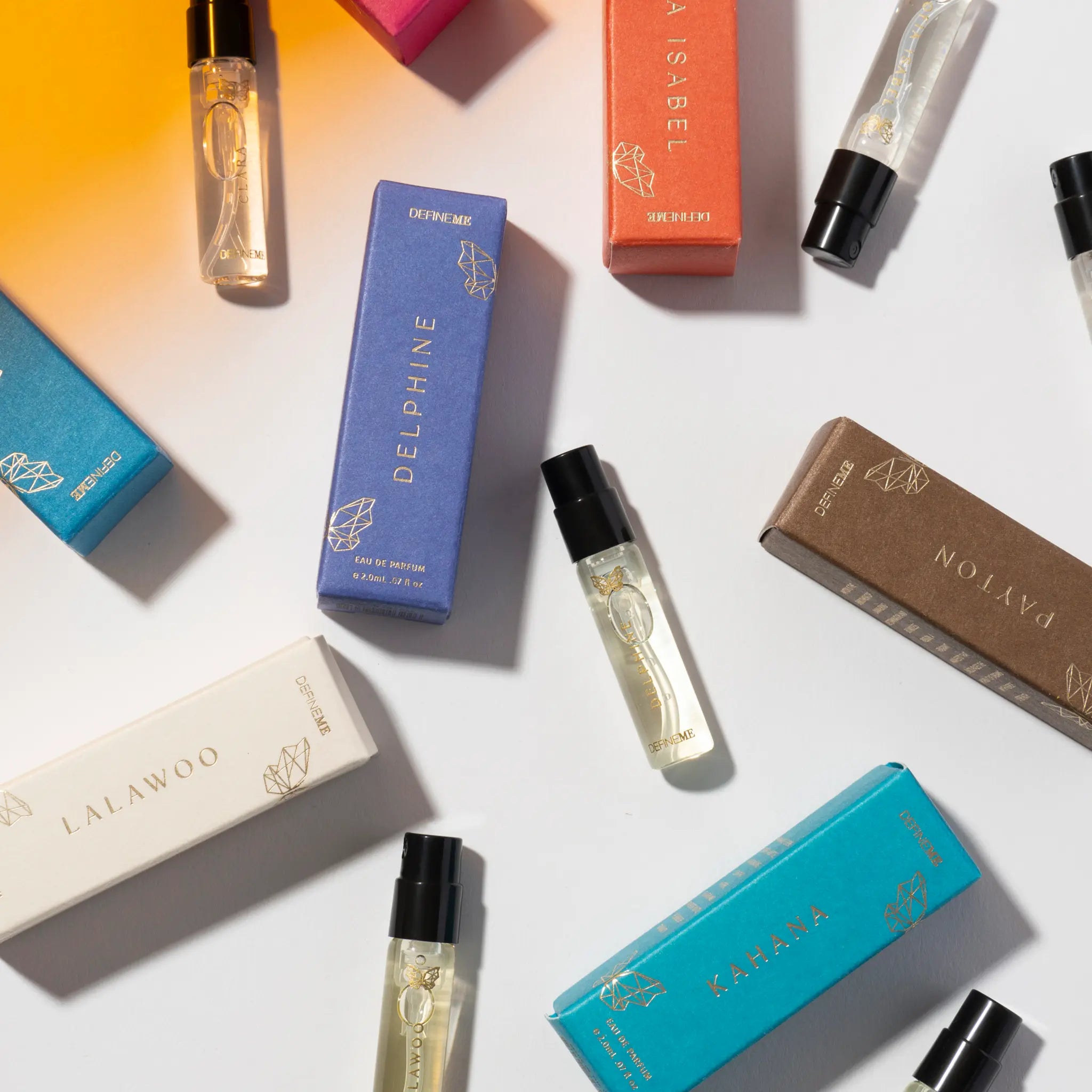
At Defineme, our fragrances are designed with layerability in mind — so whether you're into something bright and clean or rich and complex, there's always a way to wear fragrance that feels fresh, intentional, and yours.
The Takeaway
Olfactory fatigue is one of the most common (and most misunderstood) parts of wearing perfume. It doesn't mean your fragrance stopped working. It doesn't mean you need to spray more. It just means your brain is doing exactly what it's designed to do — and now you know how to work around it.
Rotate. Reset. Trust the scent. And remember: just because you can't smell it doesn't mean it isn't there, doing its thing, making an impression long after you've stopped noticing.
That's the quiet power of a great fragrance.
Ready to build a rotation that keeps your nose happy? Explore Defineme's full fragrance collection — designed to layer, mix, and wear your way.