

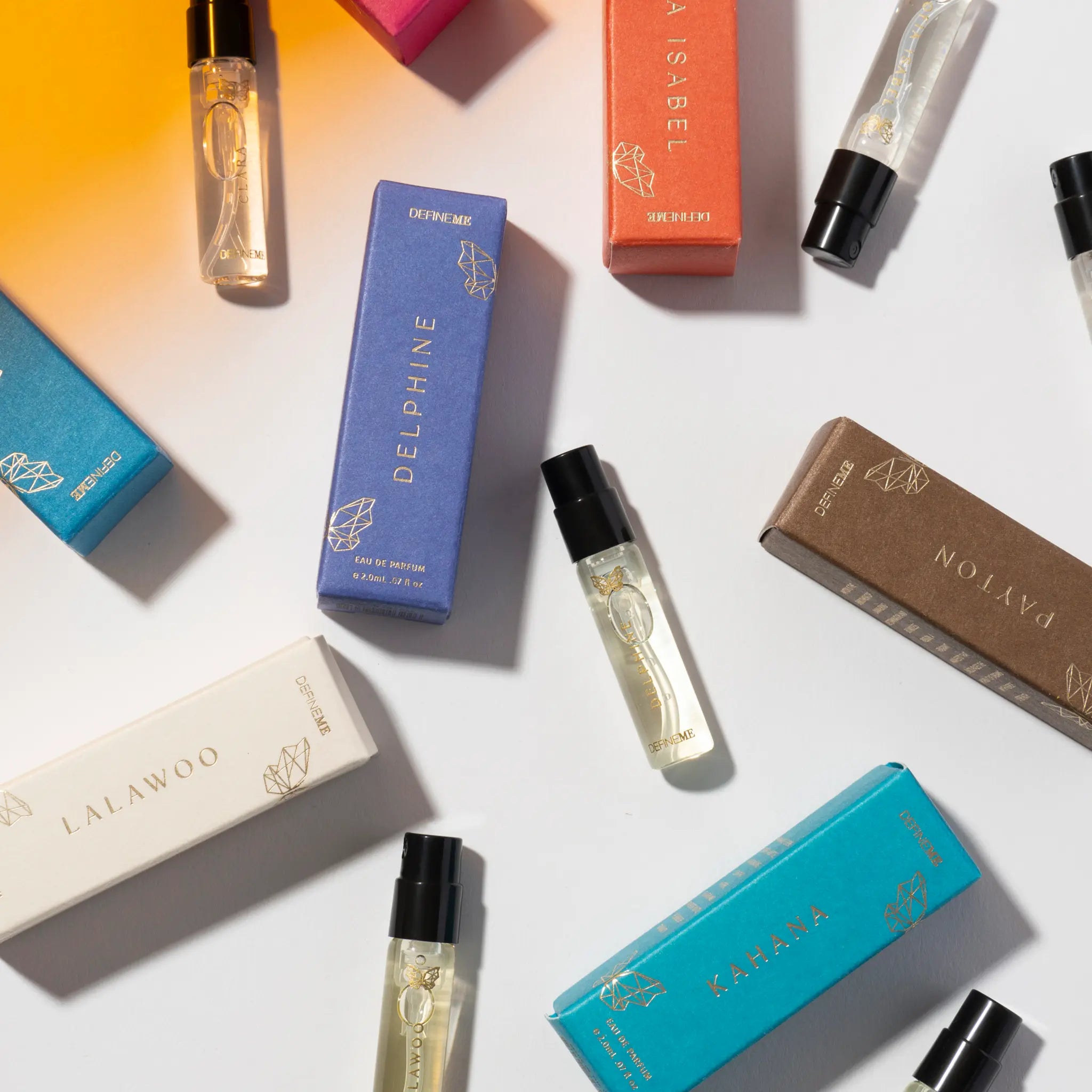

There's a reason the first thing you do when you open a new fragrance is close your eyes.
Scent has always known something the rest of our senses have to work a little harder to reach: the present moment. It doesn't ask you to think. It just arrives — and suddenly, so do you.
Whether you're new to meditation or you've had a practice for years, fragrance can become one of the most powerful anchors you have. Here's why it works, and how to make it yours.
Why Scent and Stillness Belong Together
Of all our senses, smell is the only one with a direct line to the limbic system — the part of the brain that governs emotion, memory, and the body's stress response. When you inhale a scent, the signal bypasses the thalamus (the brain's usual relay station) and goes straight to the amygdala and hippocampus. Translation: fragrance reaches the emotional brain faster than any other sensory input.
That's not just poetic. It's physiological.
This is why certain scents can stop a racing mind in a way that's almost instantaneous. It's why aromatherapy has been woven into spiritual and healing practices for thousands of years — from frankincense in ancient temples to jasmine in Ayurvedic rituals to rose in traditional Chinese medicine. Long before science had the language for it, people understood that scent could shift the inner weather.
Meditation works by training your attention. Fragrance gives your attention somewhere beautiful to land.
Setting the Scene: Fragrance as a Ritual Cue
One of the most practical ways to use scent in meditation is as a ritual anchor — a sensory cue that tells your nervous system: this is the time, this is the place, this is what we do here.
The brain is a pattern-recognition machine. When you consistently pair a specific fragrance with your meditation practice, that scent becomes a trigger. Over time, simply smelling it begins to quiet the mind. You've essentially trained yourself to arrive.
This is why the consistency of the scent matters more than the "right" fragrance. Choose something you genuinely love — something that doesn't carry strong external associations (your office, your ex, a stressful memory) — and use it only for this.
Apply it before you sit. Wear it during your practice. Let it become the smell of stillness.
Choosing a Fragrance for Your Practice
Different scent families can support different intentions. Trust your instincts first — your body usually knows what it needs — but here are some loose starting points:
For grounding and calm: Look for warm, earthy, or woody notes. Sandalwood, vetiver, cedarwood, and amber have long been used in meditative traditions for their centering, rooting quality. If your mind tends to scatter or race, these are your allies.
For clarity and focus: Clean and airy notes — like musk or soft florals — can support a meditation that's less about calming down and more about tuning in. Think of the quiet alertness after a deep breath of fresh air.
For emotional release: Rich, soft, or slightly animalic musks and florals — rose, iris, skin-like musks — can open something tender. If you're meditating to process grief, stress, or an emotional week, these tend to meet you where you are.
For devotion and ritual: Deep, resinous, or incense-adjacent notes carry centuries of ceremonial use. Benzoin, oud, labdanum, and smoky elements can elevate a practice that wants to feel sacred.
A Simple Fragrance Meditation to Try
You don't need a special cushion or an hour of silence. Five minutes with intention counts.
- Choose your fragrance and apply it to your wrists or the inside of your elbows.
- Find a comfortable position — seated, lying down, whatever lets you be still.
- Close your eyes. Take three slow, deliberate breaths before you begin.
- On the fourth breath, bring your wrist to your nose. Inhale slowly.
- Let the scent be your entire focus. Notice what you smell — not in a labeling way, but in a feeling way. What's the first note that arrives? What lingers? Does it shift?
- When your mind wanders (it will), use the scent as your anchor. Return to the inhale. Return to what's there.
- Stay as long as you'd like. There's no goal here except presence.
This is called a sensory anchor meditation, and it's one of the most accessible entry points for people who struggle with traditional breath-focused practice. Smell is vivid. It's hard to be anywhere else when you're really inside a fragrance.
Making It a Ritual
The most powerful version of this practice isn't a one-time experiment — it's a ritual you return to. Something that becomes a recognizable rhythm in your week. Even once a week, done with intention, builds something real.
A few ideas for weaving fragrance-forward mindfulness into your life:
- Morning centering: Before checking your phone, apply your chosen fragrance and take five conscious breaths. Just that. The day begins differently.
- Transition ritual: Use scent to mark the shift from work mode to rest mode. The commute home, the moment you change clothes — a spritz and three deep breaths can function as a genuine decompression tool.
- Sunday sanctuary: Pair your fragrance with a journaling practice, a bath, a slow cup of tea. Let the scent be the throughline that ties the whole ritual together.
- Before sleep: A light application of something calming on your pillow or your wrists, combined with a body scan or gratitude practice, can become a powerful signal to the nervous system that it's safe to rest.
The Fragrance Doesn't Have to Be "Meditation-y"
Here's the thing nobody says enough: your meditation fragrance doesn't need to smell like a spa or a stick of incense. It just needs to smell like you — like something you want to come back to.
A clean skin musk that makes you feel like the best version of yourself. A soft floral that carries a particular kind of quiet. A warm amber that feels like being held.
Whatever opens something inside you is the right answer.
Fragrance is deeply personal. Meditation is deeply personal. The place where they meet should be too.
Explore the DefineMe collection and find the scent that brings you home to yourself.