


You're minding your own business — grocery store, elevator, a friend's wedding — when it hits you. Not a memory, exactly. A feeling. Your stomach drops, your chest tightens, and for one disorienting second you're back there, wherever "there" was with them. Then you clock it: someone nearby is wearing the scent your ex used to wear. And just like that, years of moving on get quietly rewound.
If this has happened to you, you're not being dramatic. You're not "not over it." You're just human, and your brain is doing exactly what it was built to do.
Your Nose Has a Direct Line to Your Memory
Here's the part that explains everything: smell is the only one of your five senses that skips the brain's usual layover. Sight, sound, taste, and touch all get routed through the thalamus first, like a switchboard operator sorting incoming calls. Scent doesn't wait in that line. It travels straight to the olfactory bulb, which sits right next to — and is directly wired into — the amygdala and hippocampus, the parts of your brain responsible for emotion and memory.
Translation: a smell doesn't remind you of a feeling. It is the feeling, practically before you've had a conscious thought about it. Psychologists call this the Proust phenomenon, named after the famous scene where a bite of a madeleine cookie unlocks an entire flood of childhood memory. Your ex's cologne working the same trick on you in a Trader Joe's checkout line is the same mechanism, just with lower stakes for literature and higher stakes for your Tuesday.
Why It Doesn't Fade Like Other Memories
Most memories soften with time. You forget the exact sound of an old apartment buzzer, the specific shade of a couch you sat on for two years. But scent memories are notoriously resistant to fading. Studies on odor-evoked memory have found that smell-triggered recollections tend to be older, more emotional, and more vividly detailed than memories triggered by a photo or a song — even decades later.
Part of the reason is that you likely encountered that scent hundreds of times over the course of the relationship, often during emotionally loaded moments: the first date, quiet mornings, an argument, a goodbye at an airport. Every one of those moments got quietly filed under the same olfactory tag. So when the scent reappears, your brain doesn't retrieve one memory. It retrieves the whole folder.
It's Not About Them Anymore — It's About the Association
This is the part worth sitting with: the jolt you feel isn't really longing for your ex. It's your nervous system responding to a well-worn neural pathway. The scent became a symbol, and symbols are powerful regardless of whether you still want the thing they represent. You can be completely, genuinely over someone and still feel your pulse spike when their signature scent walks past you in a crowd. That's not a contradiction. That's just how associative memory works.
Knowing this doesn't necessarily make the jolt disappear the next time it happens — but it does take away some of its power. You're not relapsing. You're not secretly still hung up. You're having a completely normal neurological reaction to a very effective, very ancient warning-and-reward system that was never designed with breakups in mind.
How to Rewrite the Association
The good news is that scent memory works both ways. The same wiring that let an old fragrance hijack your afternoon can also be used to build something new. A few ways to loosen the old association's grip:
- Retire the scent, even if it wasn't technically "yours." If you wore something in common with your ex, or they gave you a bottle, it's okay to let it go. You don't owe a fragrance loyalty just because it's expensive or was a gift.
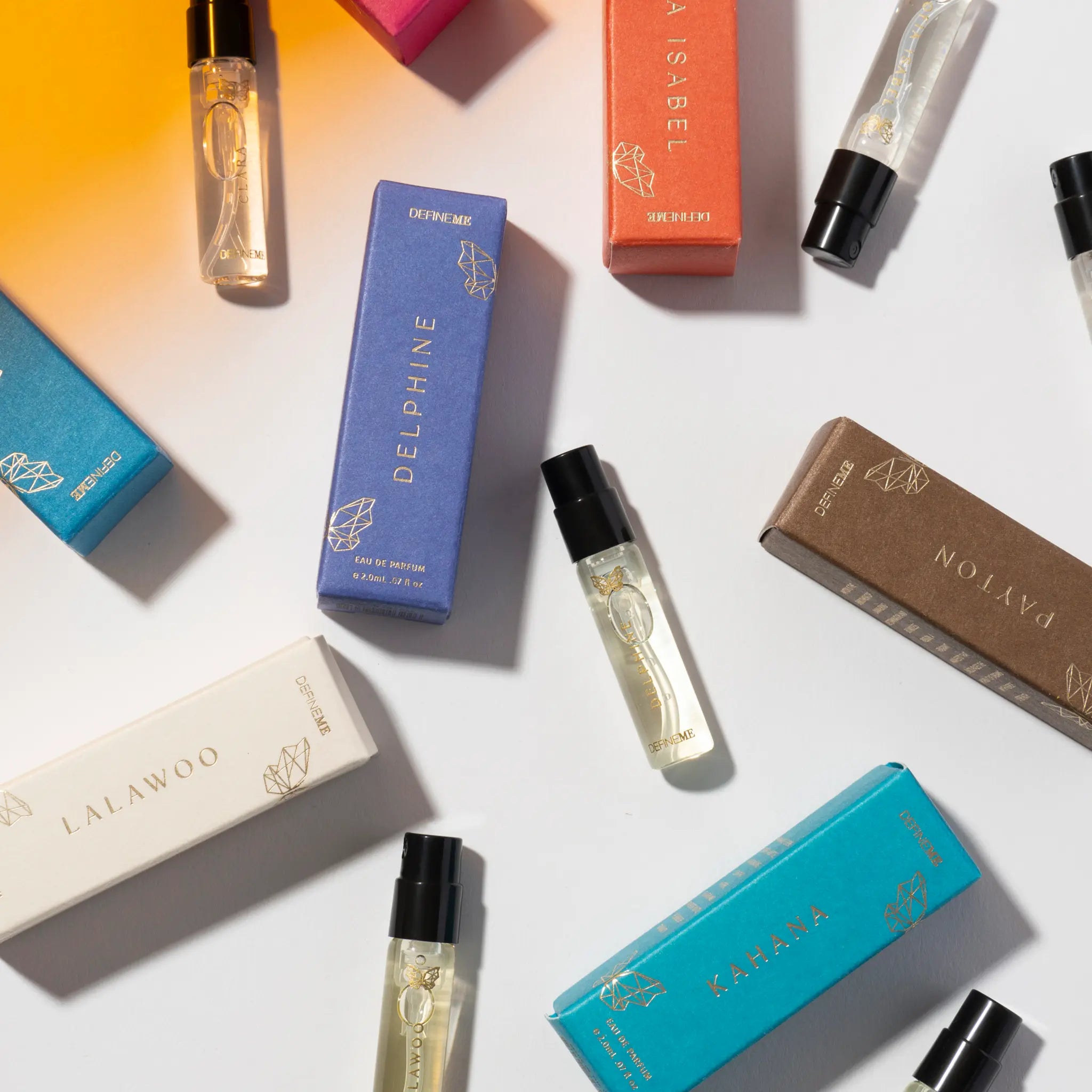
- Choose a new signature scent deliberately, not by default. This is less about "revenge glow-up" energy and more about giving your brain a fresh scent memory to start building — one that's tied to you, right now, not to any chapter that's closed.
- Wear it consistently during good moments. The same repetition that built the old association can build a new one. Wear your new scent on first dates with friends, big wins, quiet mornings that are actually yours. Let it start collecting its own folder of memories.
- Give yourself the jolt without the spiral. If you do catch a whiff of the old scent, it's fine to just notice it — "oh, that's a strong memory" — and let it pass. You don't have to follow it anywhere.
Scent is identity. That's exactly why it can ambush you years after a relationship ends, and it's exactly why it's one of the most powerful tools you have for reclaiming a sense of self on the other side of one. The right fragrance doesn't just smell good — it becomes a marker of who you are now, not who you were with someone else.
If you're in the market for a scent that's entirely, unmistakably yours, that's kind of our whole thing.